
Places
DelphiAlternative names:Place descriptionThere was a Mycenaean settlement in one of the earliest phrase of Delphi. Cultic activities in the city were attested by the figurine deposits in the sanctuary of Athena. The city was subsequently abandoned till the 10th century BC. By around 800BC, the oracle was in operation. The sanctuary and the oracle were under the control of the local community until the early 6th century BC when the Delphic Amphictyony took over the authority after the First Sacred War. The sanctuary became panhellenic and internationally famous. The city also held the first Pythian Games in 591/0 or 586/5BC. A number of cities built treasuries in Delphi, and their archaeological traces are still identifiable. Foreign rulers, especially Croesus of Lydia, also made dedications in the city. In the 6th century BC, active building activities took place in the city. The Temple of Apollo was burnt down and rebuilt in 548BC with the assistance of Alkmaionids, an exile from Athens. The Stoa of the Athenians was constructed after the Persian Wars. The Tripod of Platia was a joint dedication by the Greek cities to celebrate their victory over the Persians. In the 5th century BC, the building activities slowed down. But in the early 4th century BC, the civic environment of Delphi underwent substantial development. After the earthquake in 373BC, the Temple of Apollo was restored. But it was seized by the Phokians in 356BC, and Philip of Macedonia was asked to interfere. This invitation led to the battle of Chaironeia in 338BC and the subsequent Macedonian dominance over Greece. In the 3rd century BC, the Aitolians controlled Delphi and defended it from the Gauls’ attack in 279BC. Hellenistic monarchs continued to make dedication to the city. But in 86BC, the sanctuary of Apollo was plundered by Sulla. Nero also removed 500 statues from it. The temple was later repaired by Domitian. Hadrian was also an important benefactor of the city. The sanctuary of Athena is also known as Marmaria, the marbles. In the temple complex, there was a sanctuary of Phylakos, who helped to fight against the Persians. There were also the altars of Athena, Hygieia and Eileithiya. The Tholos was a famous building but the reason why it was built is still unknown. The Kastalian Spring was located near the Sanctuary of Athena, and Pausanias claimed that the water there was used during purification rituals. An adjacent temple in 4th century BC was either a murderous feud or a replacement of the destroyed Athena temple. A Roman agora was located at the beginning of a sacred path, which had a series of classical monuments of military victories. The path was used by cities and individuals to publicize achievements and competitions. A council house was located at the northwest direction of the sacred way. The festival of the Septerion, held every eight years, took place at the Halos near the southeast corner of the Temple of Apollo. The theatre at the east of the Temple of Apollo was used for citizens’ assemblies and music contests. At east of the theatre, the Kidians built a lesche or club-house in the middle of the 5th century BC. A stadium was also built for athletic competitions. The gymnasium in Delphi had two running tracks, one was a xystos or covered track for running in bad weather. The palaistra had rooms at the two sides of the peristyle court. A circular bath was built for bathing in cold water, whereas hot water bathing was provided in a Roman bath-complex. Images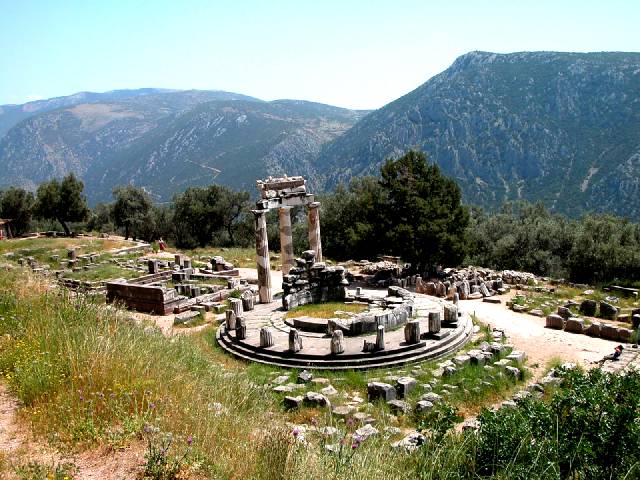 Delphi tholos 4th c BC, tb 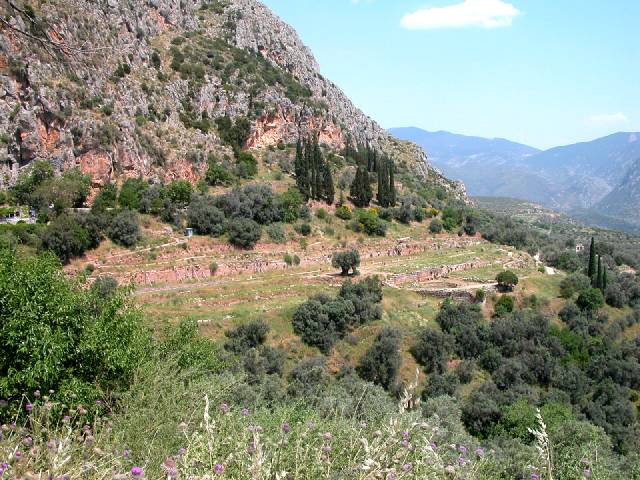 Delphi gymnasium from west, tb 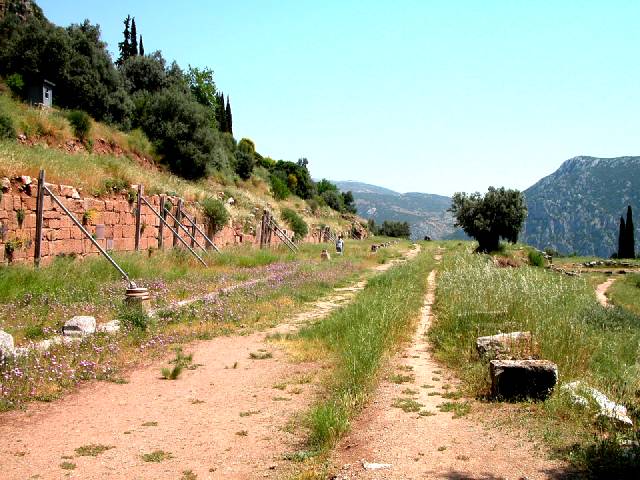 Delphi gymnasium xystos, tb 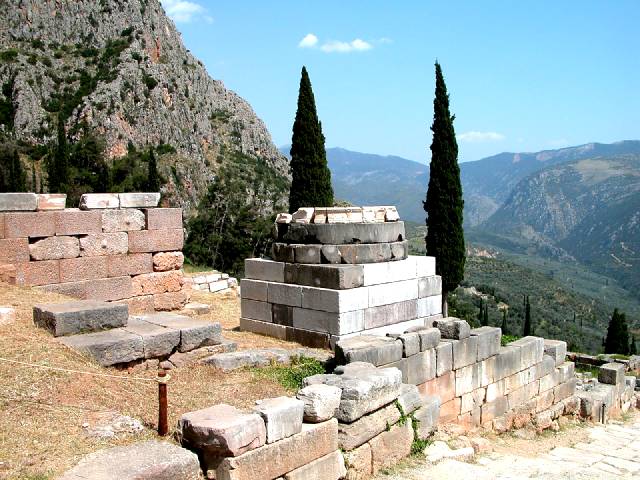 Delphi Tripod of Plataia, tb 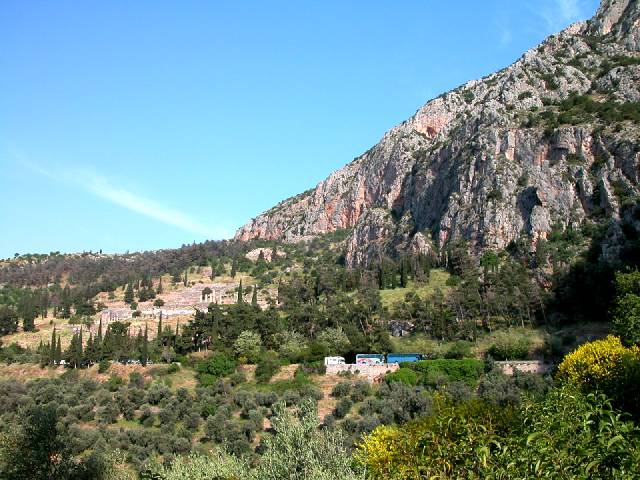 Delphi from east, tb 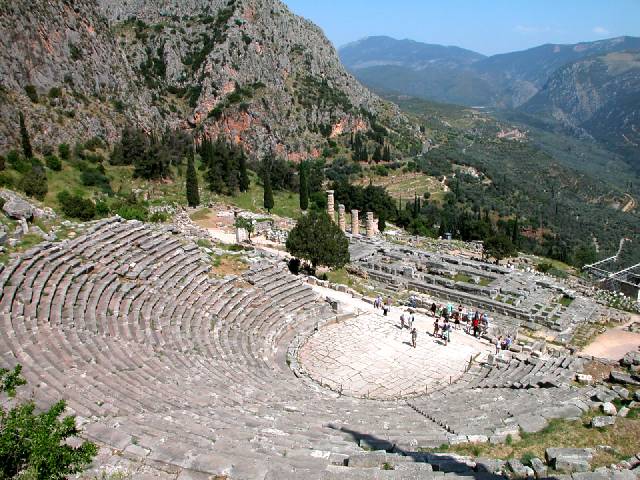 Delphi theater and Temple of Apollo from above, tb051303084 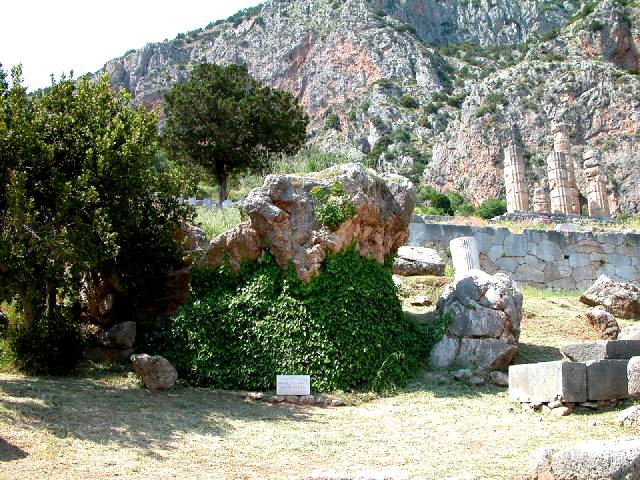 Delphi Rock of the Sibyl, tb 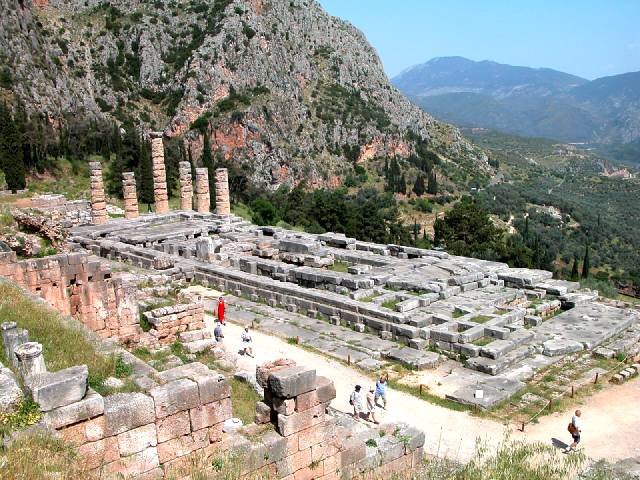 Delphi Temple of Apollo from above, tb051303076 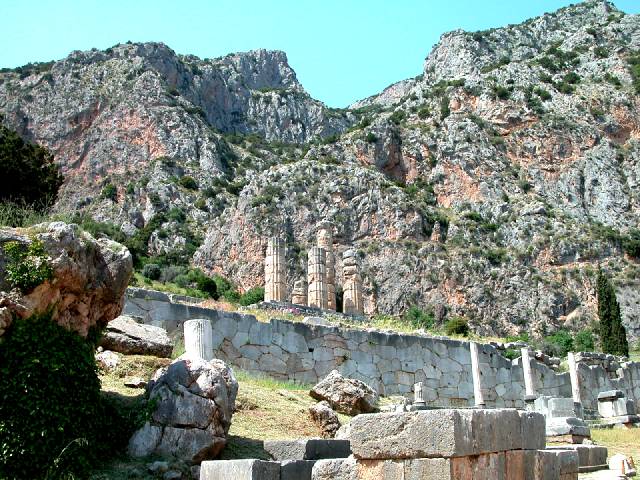 Delphi Temple of Apollo from below, tb Passages - PolybiusHistories (Loeb)Histories (Shuckburgh)Polybius CommentaryPassages - Flavius JosephusAgainst Apion (Brill)Against Apion (Whiston)The Judean Antiquities (Brill)The Judean Antiquities (Whiston) |